

Sober@23
flowers gently placed into cool, clean water

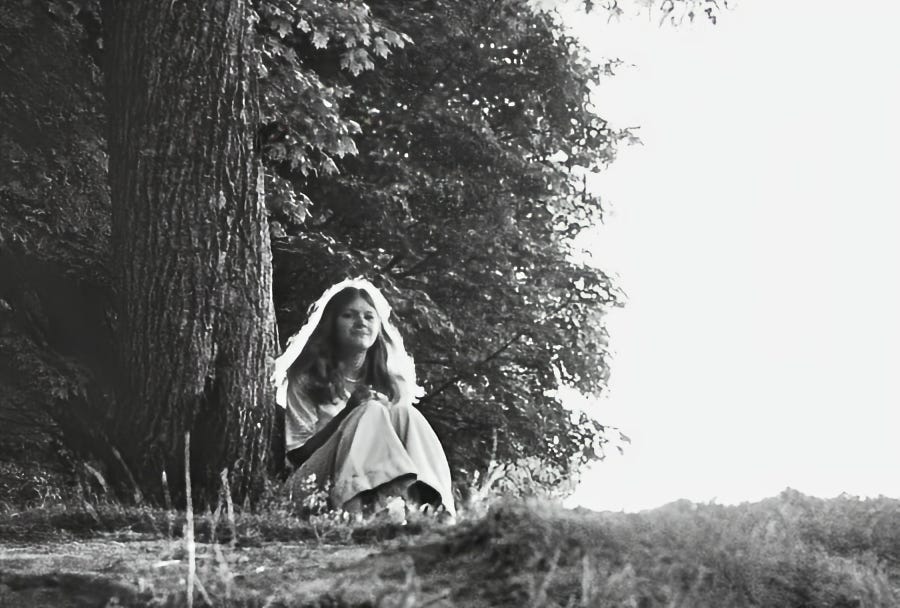
In 1974, when I was twenty-three, Ms. Magazine published an article about alcohol. The anonymous author wrote about her drinking and how she stopped.
When I saw the subject matter, I planned to skip on to the next story.
What a bore.
I did not want to hear about it.
Yet my eye caught on the first paragraph, and I didn’t stop reading until the end. Details checked boxes on my own secret list. Falling down. Throwing up. Avoiding non-drinkers. Losing friends. Constant fear. Blurred vision. Keeping a drink beside the bed so I could down it before I even stood up.
Although I grew up around drinkers, I never heard of alcoholism or even the word alcoholic. When I overdosed on alcohol and datura at sixteen and almost died, I was labeled a juvenile delinquent, a bad girl, shunned. I’d shamed my family.
My best friend accused me of getting everyone in trouble. She never wanted to see me again.
I’ve often thought that if some kind woman had taken me aside and asked what was troubling me, suggested I suffered from a condition that could be addressed, and told me it wasn’t my fault, I might have embarked on recovery then.
Six years after my overdose, I read the Ms article. I was pretty excited. I told my housemate. She insisted I wasn’t that bad and added I should quit smoking cigarettes because they made me smell. I called my three younger sisters. Each was mildly interested. “I drink more than you do, so are you sure you have a problem?” one asked.
A few miles away, Dorris Hutchison and Dr. James Milam were developing a detox and recovery program that featured twenty-eight day inpatient rehab and incorporated principles of 12-Step programs with a focus on fresh, nutritious food. They purchased the former Fairfax Psychiatric Hospital in Kirkland and named the 40-bed facility Alcenas Hospital. Bound in a bright-orange cover, Dr. Milam self-published his 51-page monograph “The Emergent Comprehensive Concept of Alcoholism.”
Shortly after I read the Ms article, the City of Seattle hired me for a research position. My assignment was to interview directors of social service and related programs throughout King County and compile a directory. I started each day drawing 3x5 cards from a stack in our downtown office, scheduling appointments, and heading off to interview directors using a prescribed form.
The first card I drew was for something called Alcenas.
When the morning of my appointment arrived, I was, as always, hung over. I called to ask if I could conduct the interview over the phone. A brusque male voice responded, “Mrs. Hutchison is expecting you. She’ll see you in half an hour.”
I tucked a beer under the seat of my car, drove to Kirkland, and knocked on Dorris Hutchinson’s office door. As far as I was concerned, she appeared old and boring. As I started to read my scripted questions, she told me she was an alcoholic. She then forced me to tour the facility to show me seemingly unconscious bodies of more old people.
I had to get out of there. I fled to my car and threw up in the parking lot.
Then I walked back to Dorris’ office. “I think I might have a problem,” I told her.
I then explained why I was actually fine.
She smiled.
“People who don’t have a problem don’t wonder whether they have a problem,” she said kindly. She pressed Dr. Milam’s bright-orange monograph into my hand. “Read this,” she suggested. “Come to a few of his free Saturday night lectures.”
The following day, back in my Seattle office, I found myself staying after work to call a number that offered help for alcoholics. Like Dorris, the man who answered the phone did not shame or blame me. When I told him I lived on Capitol Hill, he told me there were women nearby who could give me a ride to a support group. Really? People like me in my neighborhood?
He suggested a young people’s group, and after swigging what remained in various liquor bottles around my apartment, I put on lots of makeup and a cute dress and took a bus to a community center near downtown. I walked into a room of 150 people all under thirty. They were just breaking up into smaller groups.
A handsome man suggested I go to the kindergarten room, where fifteen people aged sixteen to mid-twenties sat around a table. They shared their stories. I recognized myself in every one.
I felt like a baby born without skin. I was in open-mouthed terror at everything, a child in my pretty clothing. It was as though alcohol was a camouflage I tried on, and when it was snatched from me, as I saw it then - an interesting passive term - I had to find new ways to soften my scary places.
Clutching my fear and the friends I soon made, I attended support groups all over the greater Seattle area. I liked high-brow Eastside gatherings, which seemed like giant singles gatherings. Afterward, fun women and cute guys my age would head for a coffee shop, and we’d smoke cigarettes and talk into the early morning hours. On weekends, we played softball, danced at sober clubs, and went skinny-dipping after long forest hikes. I liked fancy gatherings where I often met famous Seattle names, and I also enjoyed low-bottom groups where I might have to dodge a drunken lawyer careening around the room while I sat cross-legged on the floor.
I had no desire to abandon my mask of being a bad girl, a tough girl, cursing and smoking, only now without alcohol or drugs. I felt like a body caught by a giant tidal wave, flung here, flung there. On my one-year sobriety anniversary, a well-known poet offered me a position teaching writing to gifted and talented inner-city kids. I fell in love with those kids, and that kind of teaching carried me through the years.
Recovery from addiction, though, is rarely a straight line. In recovery circles, some talk about geographical cures. One packs up and leaves one place to start over in another. Always, always, what she unpacks in the new place is herself.
Certain I was divinely guided (even though I didn’t believe in anything divine), I abruptly moved to a cabin on the Swinomish Reservation near La Conner. I’d never been there. No problem. I was fine. I knew I’d never drink again. I soon set up highly successful workshops teaching writing, Spanish, and hammer dulcimer to children, and was written up as an exemplary woman of Skagit County.
Three years into my Skagit geographical, I was restless. I wanted to move on, but where would I go? One evening when I was reading a short story in a bar, recent Pulitzer Prize Annie Dillard attended with Gary Clevidence, who’d been my undergraduate mentor.
The next day, back in my cabin, my phone rang. “You need to study with me,” Annie said.
Still convinced I’d never drink again, I was bored with sober friends. I spent that summer dancing and carousing. Time off before embarking on my new life as a graduate student.
In fall, I packed up and moved. I stayed alcohol-free, although I once overdosed on mushrooms as I had on datura when I was sixteen. I was in conflict with my fellow students, and felt I had to tiptoe from one instructor to the other because none of them seemed to like each other. The only redeeming thread was that I continued to love teaching. As an adjunct, introducing teenagers to writing was my joy.
Shortly after I completed my master’s, with Annie Dillard as thesis chair, I landed a well-paid position as a vocational rehabilitation counselor. On my first night of training, unwilling to say “no thanks” to my new colleagues, I accepted a sip of sake.
As if my eight years alcohol-free never happened, I was soon drinking and self-medicating around the clock.
After five months, I reached out to the only person who stood by me after I overdosed at sixteen.
“I can’t do this,” I said.
Rebecca drove me to an inpatient alcohol rehab center called Care Unit. I had no idea this was where I’d met Dorris Hutchinson eight years earlier. It had only just achieved hospital status, which meant my medical insurance covered sixty inpatient days.
When I checked in, as with Dorris Hutchinson originally, I insisted I didn’t really have a problem.
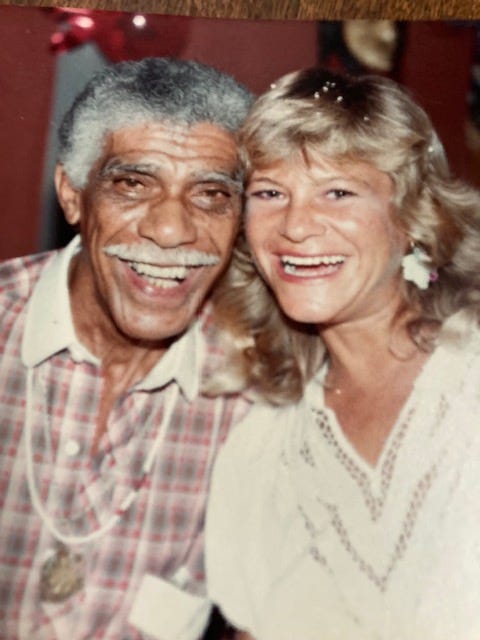
Today I remain alcohol and drug-free. I still stumble. I’m still scared. I pray and meditate, even if I have no idea what a higher power is and know it’s okay not to know. I speak with the Ancestors in the forest where I walk for miles every morning. When I release rumination and obsession, my mind sometimes clears.
After Covid lockdown ended, I set up a support group. A woman’s story in Ms, read by chance, helped me question my own alcohol dependence at twenty-three. An older woman’s story shortly after that helped me name my own problem. I didn’t have to live that way anymore if I didn’t want to.
Now I could help create a safe space for other women.
Three years later, in our little room filled with light, ten or twenty of us meet every week to listen to each other’s stories. Several of us have been around for decades, while others walk in the door as I once did, faces swollen with tears and apologies. We offer the grace of privacy and love as the newcomers emerge, as we elders once did, like flowers gently placed into cool clean water.
Dr. Milam’s original bright-orange monograph is published as Under the Influence, James R. Milam and Katherine Ketchum, Random House, 2021.
Thanks, Kirie.
Alcohol has been a crutch for me for sixty years, starting as a cure for social anxiety as a teenager and never leaving me. Although never a heavy drinker, it's been there for me as part of every bad decision I've ever made.
We each come to these realizations in different ways. For some, it's a magazine article and a chance meeting. For others, like me, it's of all things my sports watch doubling as a sleep tracker. I'm a scientist and I can't ignore the evidence in the data. Alcohol depresses my sleep quality, my heart rate variability, and my recovery; and increases my resting heart rate, my respiration rate, and my stress level. With cardiovascular disease and dementia in my family, it's time to pay attention. Plus, I've never, not even once, woken up thinking I wish I'd had more alcohol the night before. I'm also, of all things, losing my taste for it, actually preferring NA beer over the "real thing." And since figuring out that I'm autistic, I understand the roots of my social anxiety and curate my life to minimize it.
So, I'm not saying never; just much less, maybe none.
Good luck. ❤️
Such an amazing story, an amazing journey. I love that it currently pools into the support group you organized. Nice to be reminded of your work with Annie Dillard ❤️.